



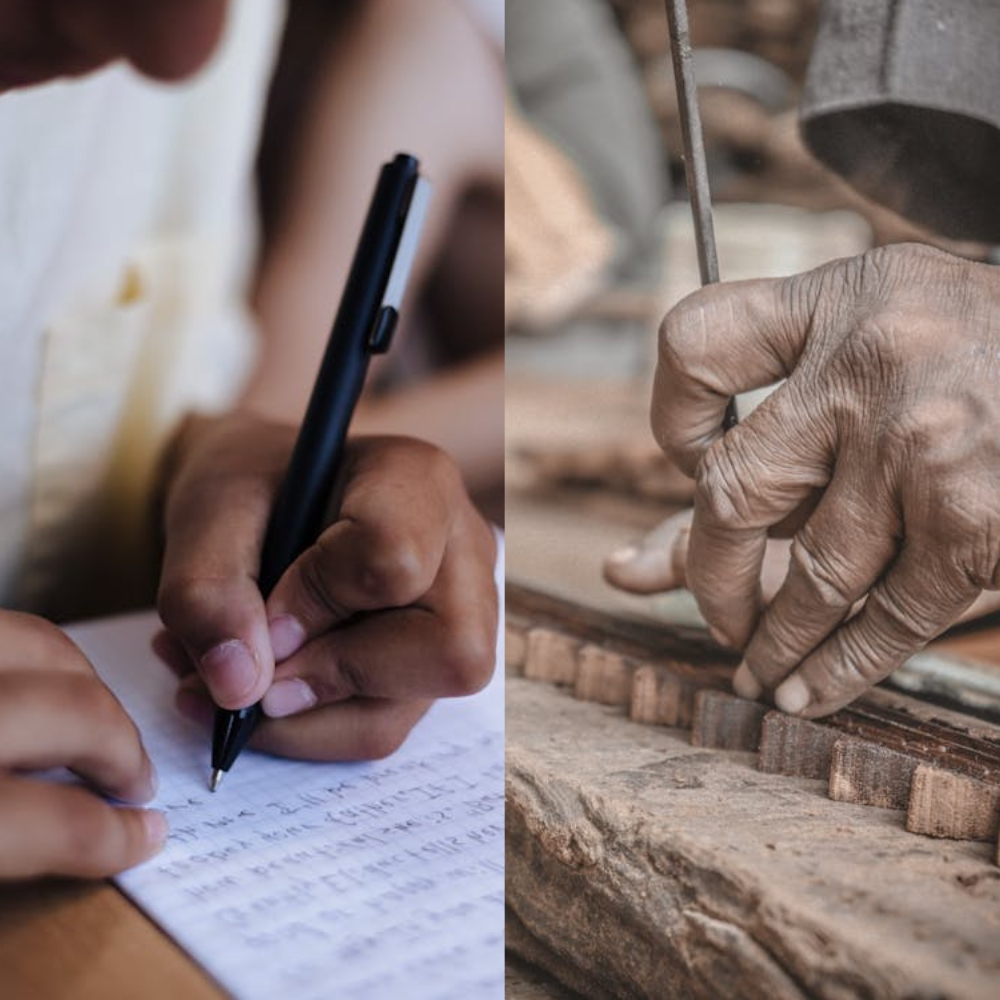
How Literature and Labor Go Hand in Hand
By Rafli Izzuddin
Happy Labor Day! This day is often associated with the celebration of workers’ contributions to society, but beyond its historical roots, it also offers a meaningful opportunity to reflect on how labor is represented and explored through literature. In this area, labor is interpreted and given voice, as well as performed.
Across literary history, authors have captured the experiences of workers and the conditions that shape their lives. Classic works such as Hard Times by Charles Dickens and The Grapes of Wrath by John Steinbeck remain powerful examples of how fiction can illuminate labor struggles, economic inequality, and social injustice. These narratives reveal not workers’ hardships, resilience, and humanity. More recent literary research continues to affirm the relevance of such works, noting that literature provides a critical lens through which readers can better understand labor systems and their human impact (Fisher, 2021). Through storytelling, literature bridges the gap between abstract economic concepts and lived human experience.
These contemporary studies highlight that literature actively shapes how societies perceive work and workers. According to Sayers (2022), modern literary analysis shows that representations of labor in fiction influence readers’ awareness of class structures and labor rights, encouraging empathy and critical reflection. This is particularly important in today’s globalized world, where labor issues remain complex and often invisible.
This connection between literature and labor also underscores the importance of critical reading and interpretation. Engaging with texts that depict labor conditions allows students to analyze themes such as power, exploitation, resistance, and dignity. It also encourages them to see literature not just as artistic expression but also as a form of social commentary. As argued by Liu and Wang (2023), studying literary representations of work helps students connect historical labor struggles with contemporary issues, making literature a tool for both academic inquiry and social awareness.
In conclusion, by examining how literature portrays workers and their experiences, students and scholars gain insight into the cultural and human dimensions of labor. This perspective reinforces the value of literary studies as a discipline that not only preserves stories but also deepens our understanding of society. In this way, Labor Day gives us a moment to recognize the power of language in giving meaning to work and in shaping how we understand the world around us.
References
Fisher, M. (2021). Working-class literature and the crisis of representation. Cambridge University Press.
Liu, Y., & Wang, H. (2023). Literature and labor: A critical approach to social representation in modern fiction. Journal of Literary Studies, 39(2), 145–160.
Sayers, S. (2022). Marxism and the representation of labor in contemporary literature. Critical Horizons, 23(1), 67–82.
Comments :