


Being a Research Intern at CDE
The date was 13 February 2026. Fresh off performing Friday prayer, I hailed a ride to The Cortado, a coffee shop near one of BINUS University’s campuses. While I could have simply walked there, I didn’t want to keep the others waiting. When I arrived, everyone was already in place – all that was left was a few push and pulls of the furniture, a (thankfully heeded) request for the barista to turn the music down, and a little troubleshooting with the recording equipment. Only then did the interview begin.
I already knew Dimas Ivan Adhiatma as a classmate; we weren’t what people would call ‘fire-forged friends’, but still acquainted enough to be on friendly terms with each other. This, I feel, helped me with asking him what he did as a researcher last semester.
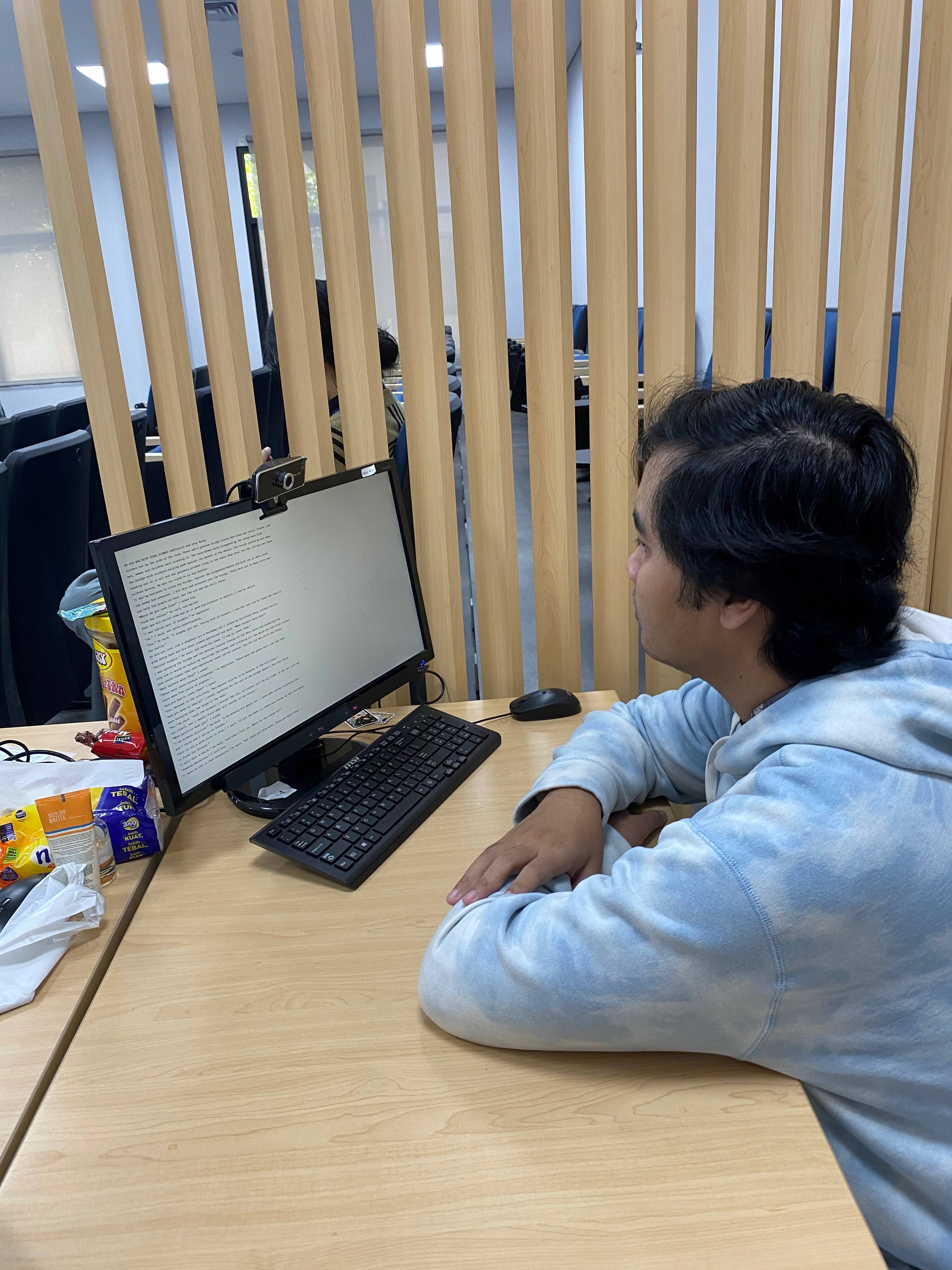
“My research is mainly focused on the study of the movement of the eye,” he began. He went on to elaborate on how he and his group conducted their research on fellow university students. “We are trying to analyze the pattern of the eye’s movement when a student tries to read fiction,” he continued.
I then asked him about what the team learned. “So the outcome of the research was quite interesting, actually,” he answered. “We found out that there’s a lot of variables when it comes to reading and how the movement of the eye reflects their personality, preference, and sometimes even their vocabulary.” He described the fluctuating nature of these variables, how they affect reading speed, and how they influence people to focus on certain words and passages, allowing them to process and comprehend the story better.
Finding the subject material fascinating, I moved on to my next question: What ‘lessons’ were there to be learned from the results?
His answer was related to improving reading at BINUS. “We wanted to ensure that the reading environment was supportive enough so that people could have a better reading experience, have a easier way of digesting information and perhaps even have a better enjoyment in reading.” He concluded by affirming that studying the movement of the eye was always for the betterment of the students.
My only response was to voice my then-current thoughts: “I think that sounds very noble, Dimas.” He laughed and then thanked me for the interview.
Reported by Rafli Izzuddin who interviewed Dimas Ivan Adhiatma on his Research Internship experience at Creative Digital English in 2025.
Comments :