


Video or Audio Listening Tests for English Language Teaching Context: Which is More Effective for Classroom Use
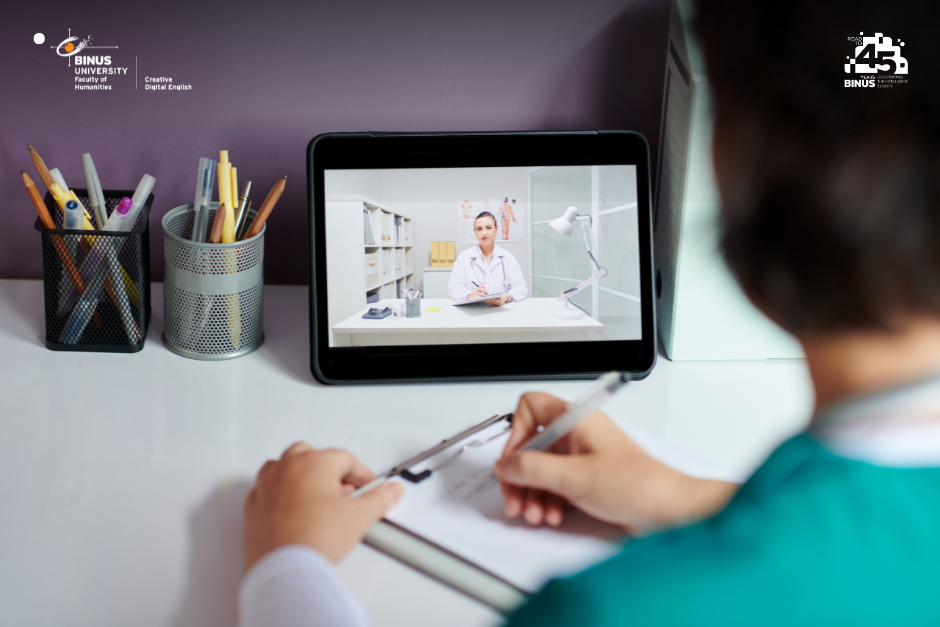
Multimodal inputs (both auditory and visual) in the forms of films and videos have long been used in teaching EFL listening comprehension. Previous studies have shown that listening while watching videos can significantly aid students’ comprehension. However, videos were rarely used as testing materials since they contained more than aural input so they did not ‘really’ test listening.
This study explored the extent to which multimodal testing materials can be used in testing listening comprehension for EFL students and how the results would differ from that of mono modality testing materials. The participants were 100 students of the English Department of BINUS University. The researchers gave them two kinds of tests: the video listening test (VLT) and audio listening test (ALT). The materials were two short videos from YouTube. The first test, ALT, was given after the participants listened to the videos twice. On the contrary, VLT was administered after they watched the videos twice. To examine the differences in the effects of VLT or ALT on EFL students’ performance in listening comprehension, the data were analyzed quantitatively. The findings show that the video listening test produced a mean score of 11.80 compared to the mean score of the audio listening test, which is only 10.00. These results indicate that students got better scores for VLT compared to ALT, implying that their performance in listening comprehension was significantly improved with multimodal testing materials. It is hypothesized that the videos enhanced learners’ comprehension because they give multimodal inputs in the forms of visuals (context, subtitles, pictures, etc.) as well as auditory input. Therefore, multimodal inputs can be considered to enhance working memory and comprehension. This multimodal form of presentation can be highly useful in the teaching of EFL listening comprehension, along with the teaching and learning of other language skills (reading, writing and speaking).
With the advance of technology and the information age we live in, language teaching and learning materials can be easily obtained. However, care should be taken in selecting and designing the instruction and testing materials to achieve the desired goal. The fact that the materials for the study were chosen randomly from TED Talks recording became the limitation of the present research. Moreover, a larger sample size can be used to examine the impact of multimodalities on the comprehension of various text types, such as lectures, dialogues, and authentic listening materials. This study only used a posttest only control group design in which the students’ listening improvement may be assisted by other individual learning activities done by the students outside the research treatments. Future studies can and should use a pretest and posttest controlled and experimental group design to get more valid and reliable data on the students’ listening ability improvement, giving more solid evidence on the effective use of multimodal presentation in listening tests to use in English as a foreign language class.
Based on an article by Clara Herlina Karjo, Menik Winiharti, and Safnil Arsyad.
https://ejournal.unib.ac.id/index.php/joall/article/view/19920
Written by Rafli Izzudin.
Comments :